How Haru works

One rainy detour.
A Story you can learn from.

Follow a fictional young designer in Portland: an unplanned plant, a tiny apartment, and Korean made from her own three sentences. Scroll through a preview built from the actual generated lesson.

  1. 01

    Write

    Start with a day that sounds like you.

    A first design job, an unexpected plant, and a small apartment. Write or speak in English, then tap Create lesson.

    Your diary

    On my way home from my first design job in Portland, I ducked into a little shop to escape the rain and came out with a plant I hadn't planned to buy.

    The owner assured me it was easy to look after, so I decided to give my gardening skills another chance.

    I put it by the window of my tiny rented apartment, and now the whole place feels a little more alive.

  2. 02

    Cartoon Diary

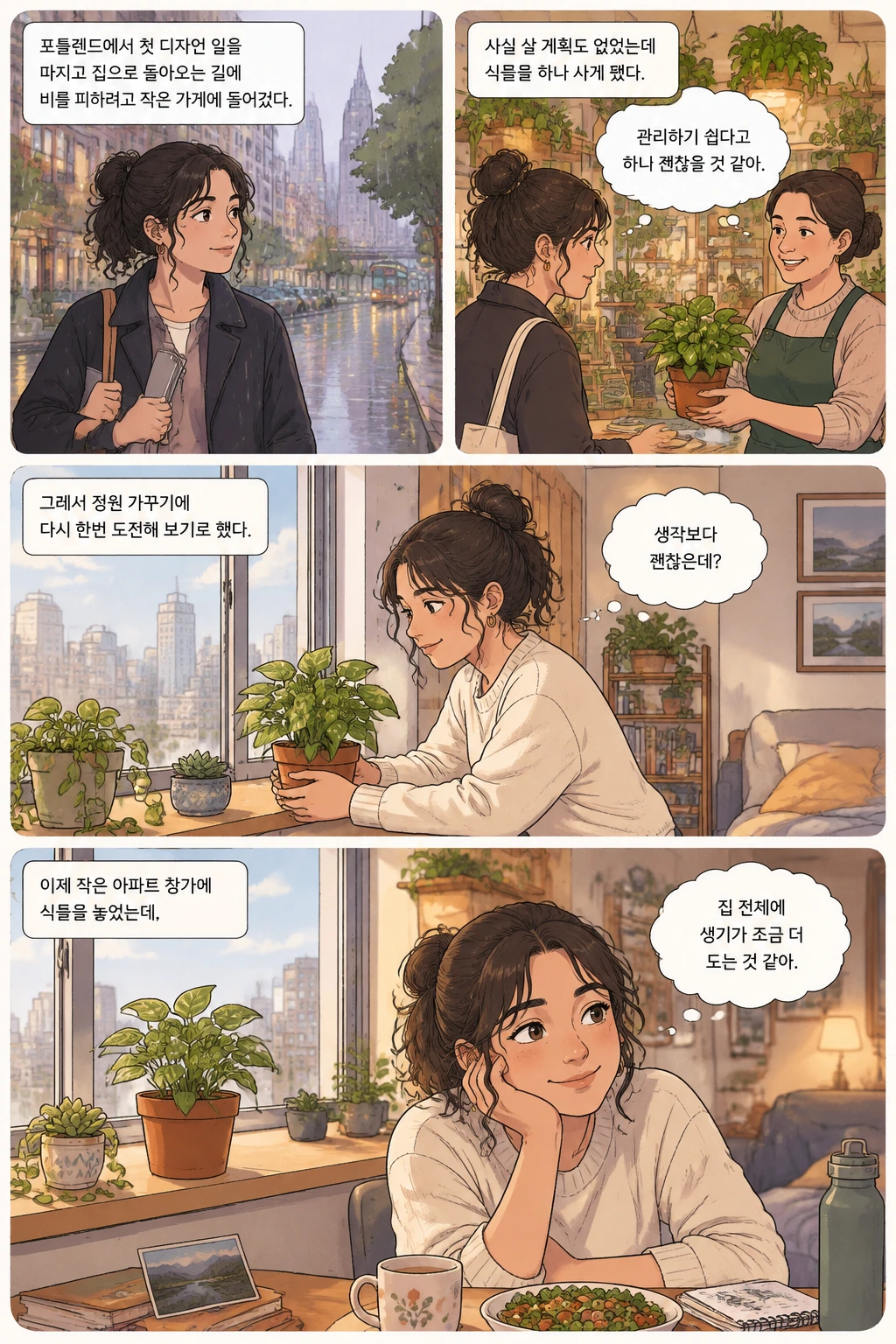
    Meet the moment again in pictures.

    If diary images are enabled, your Story can become a cartoon. The image here was generated with this diary.

    Cartoon Diary

    Actual generated cartoon of the Portland plant diary
  3. 03

    Your Korean Story

    Read the Korean beside your own words.

    Each sentence keeps its English source. Swipe between the sentences and follow the Korean that came from your diary.

    Your Korean Story

    포틀랜드에서 첫 디자인 일을 마치고 집으로 돌아오는 길에 비를 피하려고 작은 가게에 들어갔다가, 살 계획도 없었던 식물을 하나 사서 나왔어요.
    Sentence 1

    On my way home from my first design job in Portland, I ducked into a little shop to escape the rain and came out with a plant I hadn't planned to buy.

  4. 04

    Grammar

    Notice the grammar inside your Story.

    Open a grammar card to explore the form in context. The screen shows the actual generated results.

    Grammar

    -려고

    (-ryeogo) indicates an intention or plan to perform a certain action, and implies that the next action is taken in order to achieve that action.

    -에서

    (-e-seo) is a word attached to indicate the place or starting point where an action takes place, or the standard of comparison.

    -아/어서

    (-a/eoseo) is an expression that links sentences, indicating that the event in the preceding clause becomes the cause or reason for the following clause. It attaches as '-아서' after stems whose final sound is close to ㅏ or ㅗ, as '-어서' after stems with other sounds, and as '-해서' after '-하다' verbs and adjectives.

    -다가

    (-daga) indicates a flow where an action or state proceeds but changes to another action or state or stops midway.

    -으로

    (-euro) is a word that attaches to the names of people or things with a final consonant to indicate means, methods, directions, qualifications, etc.

    어요

    Polite spoken ending (haeyo style).

  5. 05

    Basic grammar

    Review the small, familiar forms.

    Open Basic grammar for the shorter, frequent forms. Keep your attention on the parts you need today.

    Basic grammar

    -ㄴ/은

    (-n/eun) '-n/eun' modifies the word that follows to describe the state, nature, or completed actions of a person or thing. Usually, '-n' is attached if there is no final consonant, and '-eun' is attached if there is a final consonant. For example, in “따뜻한 옷을 입었어요.”, “한” inside “따뜻한” is the grammar form, and “따뜻한” describes the following noun “옷”.

    고

    Connects clauses (listing/sequence).

    에

    Marks time/place/direction reference.

    도

    Adds meaning of also/too.

    었

    Adds past tense information.

    을

    Marks object.

    를

    Marks object.

  6. 06

    Vocabulary

    Keep the words connected to your sentence.

    Read the English counterpart, word type and base form where available. Bookmark a word you want to revisit.

    Vocabulary

    집noun

    home

    디자인 일noun

    design job

    포틀랜드noun

    Portland,

    들어갔다가verb

    ducked into

    Base form: 들어가다

    The Korean says the speaker went into the shop, while “ducked into” adds the quick, shelter-seeking feel of escaping the rain.

    작은adjective

    little

    Base form: 작다

    가게noun

    shop

    피하려고verb

    to escape

    Base form: 피하다

    비noun

    rain

    나왔어요verb

    came out

    Base form: 나오다

    식물noun

    plant

    계획noun

    planned

    Korean expresses planning with the noun 계획 in a phrase meaning there was no plan, while English uses the verb “planned.”

  7. 07

    Phrases and clauses

    Learn a useful piece of the sentence.

    Follow the useful expressions extracted from the same diary.

    Phrases and clauses

    집으로 돌아오는 길에

    On my way home

    작은 가게에 들어갔다가,

    ducked into a little shop

    비를 피하려고

    to escape the rain

    식물을 하나 사서 나왔어요.

    came out with a plant

    살 계획도 없었던 식물을 하나

    a plant I hadn't planned to buy.

  8. 08

    Listen

    Hear it again, at your own pace.

    Tap the play icon beside a sentence. Change playback speed in Settings → Diary & Audio; using a cloned voice is optional.

    Listen

    포틀랜드에서 첫 디자인 일을 마치고 집으로 돌아오는 길에 비를 피하려고 작은 가게에 들어갔다가, 살 계획도 없었던 식물을 하나 사서 나왔어요.
    Sentence 1

    On my way home from my first design job in Portland, I ducked into a little shop to escape the rain and came out with a plant I hadn't planned to buy.

Recorded example

Explore the actual generated results.

Three English sentences became three Korean sentences, 30 grammar entries, 27 vocabulary entries, and 10 phrase or clause entries. Results vary with the diary.

All grammar, vocabulary, phrases and clauses

Original diary

  1. On my way home from my first design job in Portland, I ducked into a little shop to escape the rain and came out with a plant I hadn't planned to buy.
  2. The owner assured me it was easy to look after, so I decided to give my gardening skills another chance.
  3. I put it by the window of my tiny rented apartment, and now the whole place feels a little more alive.

Korean Story

  1. 포틀랜드에서 첫 디자인 일을 마치고 집으로 돌아오는 길에 비를 피하려고 작은 가게에 들어갔다가, 살 계획도 없었던 식물을 하나 사서 나왔어요.
  2. 주인은 관리하기 쉽다고 장담했고, 그래서 정원 가꾸기에 다시 한번 도전해 보기로 했어요.
  3. 세 들어 사는 작은 아파트 창가에 식물을 놓았는데, 이제 집 전체에 생기가 조금 더 도는 것 같아요.

Grammar

-려고(-ryeogo) indicates an intention or plan to perform a certain action, and implies that the next action is taken in order to achieve that action.
-ㄴ/은(-n/eun) '-n/eun' modifies the word that follows to describe the state, nature, or completed actions of a person or thing. Usually, '-n' is attached if there is no final consonant, and '-eun' is attached if there is a final consonant. For example, in “따뜻한 옷을 입었어요.”, “한” inside “따뜻한” is the grammar form, and “따뜻한” describes the following noun “옷”.
-에서(-e-seo) is a word attached to indicate the place or starting point where an action takes place, or the standard of comparison.
-아/어서(-a/eoseo) is an expression that links sentences, indicating that the event in the preceding clause becomes the cause or reason for the following clause. It attaches as '-아서' after stems whose final sound is close to ㅏ or ㅗ, as '-어서' after stems with other sounds, and as '-해서' after '-하다' verbs and adjectives.
-다가(-daga) indicates a flow where an action or state proceeds but changes to another action or state or stops midway.
-으로(-euro) is a word that attaches to the names of people or things with a final consonant to indicate means, methods, directions, qualifications, etc.
어요Polite spoken ending (haeyo style).
고Connects clauses (listing/sequence).
에Marks time/place/direction reference.
도Adds meaning of also/too.
었Adds past tense information.
을Marks object.
를Marks object.
-기(-gi) Turns a verb or adjective into a noun-like expression, allowing an action or state to function as a subject, object, or topic.
-기에(-gie) is used in writing to explain an action or judgment of the following statement by citing a fact as a reason or basis.
로Marks direction, means, or role.
어요Polite spoken ending (haeyo style).
고Connects clauses (listing/sequence).
은Marks topic or contrast.
었Adds past tense information.
-ㄴ/은(-n/eun) '-n/eun' modifies the word that follows to describe the state, nature, or completed actions of a person or thing. Usually, '-n' is attached if there is no final consonant, and '-eun' is attached if there is a final consonant. For example, in “따뜻한 옷을 입었어요.”, “한” inside “따뜻한” is the grammar form, and “따뜻한” describes the following noun “옷”.
-는데(-neunde) is a sentence-connecting expression that lays the preceding clause down as the background for what you say next. Other facts, explanations, contrasts, or requests can follow, and when combined with the past tense, it appears as '했는데', '갔는데', or '먹었는데'. Rather than classifying it as a separate '-했는데' grammar, it is sufficient to understand it as the basic '-는데' combined with a past tense expression.
아요Polite spoken ending (haeyo style).
에Marks time/place/direction reference.
가Marks subject.
았Adds past tense information.
을Marks object.
었Adds past tense information.
것Clause nominalizer.
어요Polite spoken ending (haeyo style).

Vocabulary

집home
디자인 일design job
포틀랜드Portland,
들어갔다가ducked into

The Korean says the speaker went into the shop, while “ducked into” adds the quick, shelter-seeking feel of escaping the rain.

작은little
가게shop
피하려고to escape
비rain
나왔어요came out
식물plant
계획planned

Korean expresses planning with the noun 계획 in a phrase meaning there was no plan, while English uses the verb “planned.”

주인owner
장담했고assured
쉽다고easy
관리하기look after,
도전해give my gardening skills another chance.

Korean frames this as taking on gardening as a challenge again, conveying the attempt to give it another opportunity rather than literally granting skills a chance.

가꾸기에gardening
놓았는데put
창가by the window

창가 refers to the area beside a window, naturally conveying the location phrase “by the window” in this sentence.

작은tiny
아파트apartment,
이제now
집 전체whole place

집 전체 means the entirety of the home, serving as the natural contextual equivalent of “the whole place.”

같아요feels

같아요 presents an impression that something seems a certain way, matching “feels” in this context.

조금a little
더more
생기alive.

생기 names vitality, which Korean uses here to express that the home feels more alive.

Phrases and clauses

집으로 돌아오는 길에On my way home
작은 가게에 들어갔다가,ducked into a little shop
비를 피하려고to escape the rain
식물을 하나 사서 나왔어요.came out with a plant
살 계획도 없었던 식물을 하나a plant I hadn't planned to buy.
관리하기 쉽다고it was easy to look after,
정원 가꾸기에 다시 한번 도전해 보기로 했어요.I decided to give my gardening skills another chance.
창가에 식물을 놓았는데,put it by the window
세 들어 사는 작은 아파트my tiny rented apartment,
생기가 조금 더 도는 것 같아요.feels a little more alive.
Open the recorded text and learning data

Make it your own

Start with one moment from your day.

Features